 Due to a technical problem, our website is only available to a limited extent. This also affects our download service area. We are already working on the solution and ask for your understanding.
Radar sensors for level measurement
Reliable measurement results of fill levels with high accuracy, even with highly fluctuating surfaces - Kübler radar fill level sensors measure precisely and error-free even with wave motion, bubble formation or other abrupt fill level fluctuations. The basis for this is a unique combination of high measuring rate and smart filter algorithms.
Radar sensors for level measurement
Reliable measurement results of fill levels with high accuracy, even with highly fluctuating surfaces - Kübler radar fill level sensors measure precisely and error-free even with wave motion, bubble formation or other abrupt fill level fluctuations. The basis for this is a unique combination of high measuring rate and smart filter algorithms.
Advantages of Kübler radar sensors
PRODUCTIVE
Precise level measurement even in harsh industrial environments.

RELIABLE
Reliable and fast level measurement even in the presence of dust, steam, smoke, vibrations or extreme temperatures
ECONOMIC
Minimal maintenance:
no moving parts - contactless measurement - hardly any cleaning required
Level Sensor Performance
Level Sensor Performance
Level Sensor Performance
Level Sensor Performance
Level Sensor Performance
Level Sensor Performance
Level Sensor Performance
Level Sensor Performance
Radar sensors for demanding measurement tasks with liquid metal
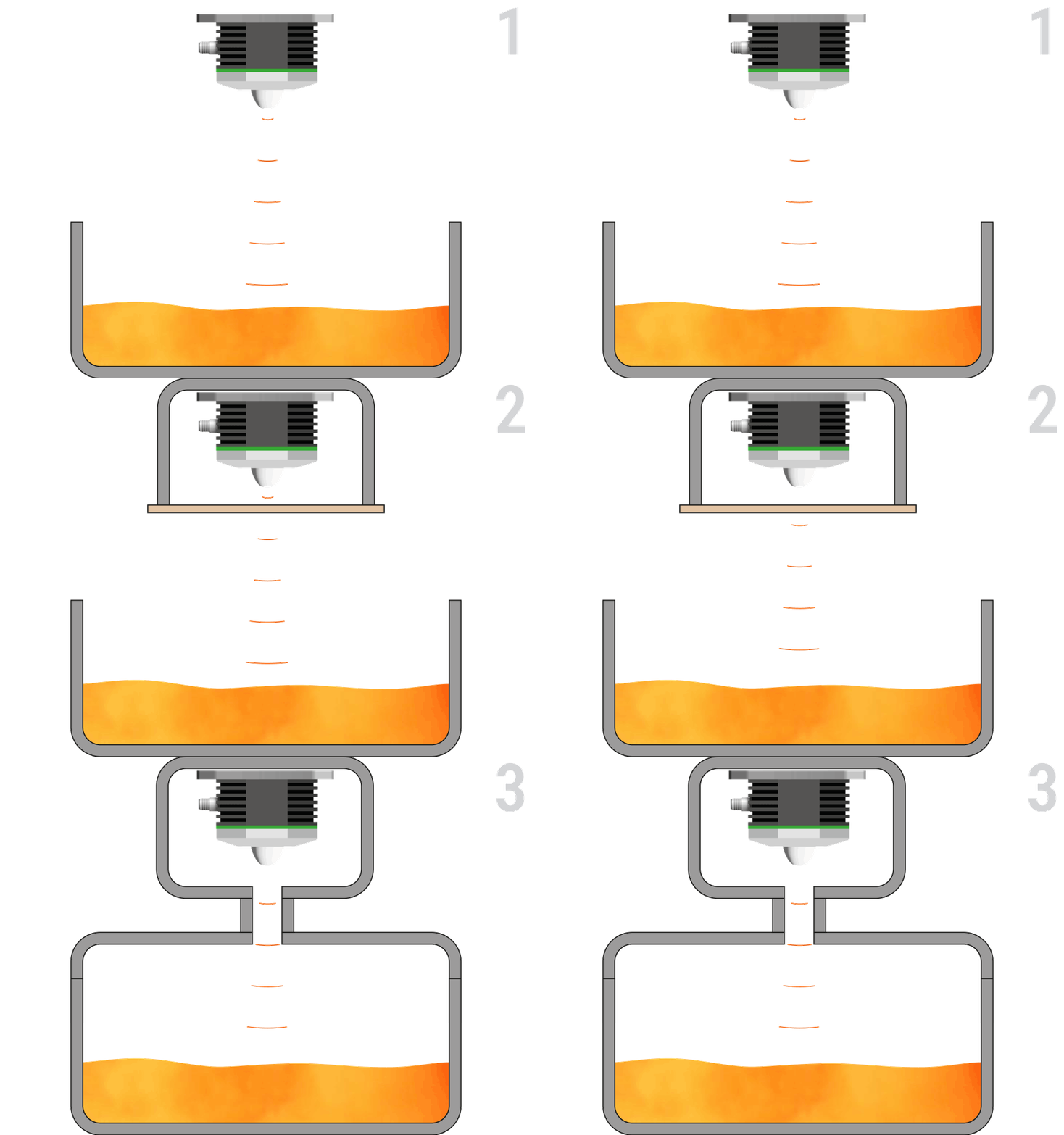
Because certain materials are permeable to radar waves, this
opens up installation options that are not possible with other measurement systems.
- Direct measurement of molten metal.
- Measurement from a heat-shielded housing with a heat-resistant cover plate that is transparent to radar waves.
- Measurement from a heat-shielded housing through openings into a closed vessel (melting furnace).

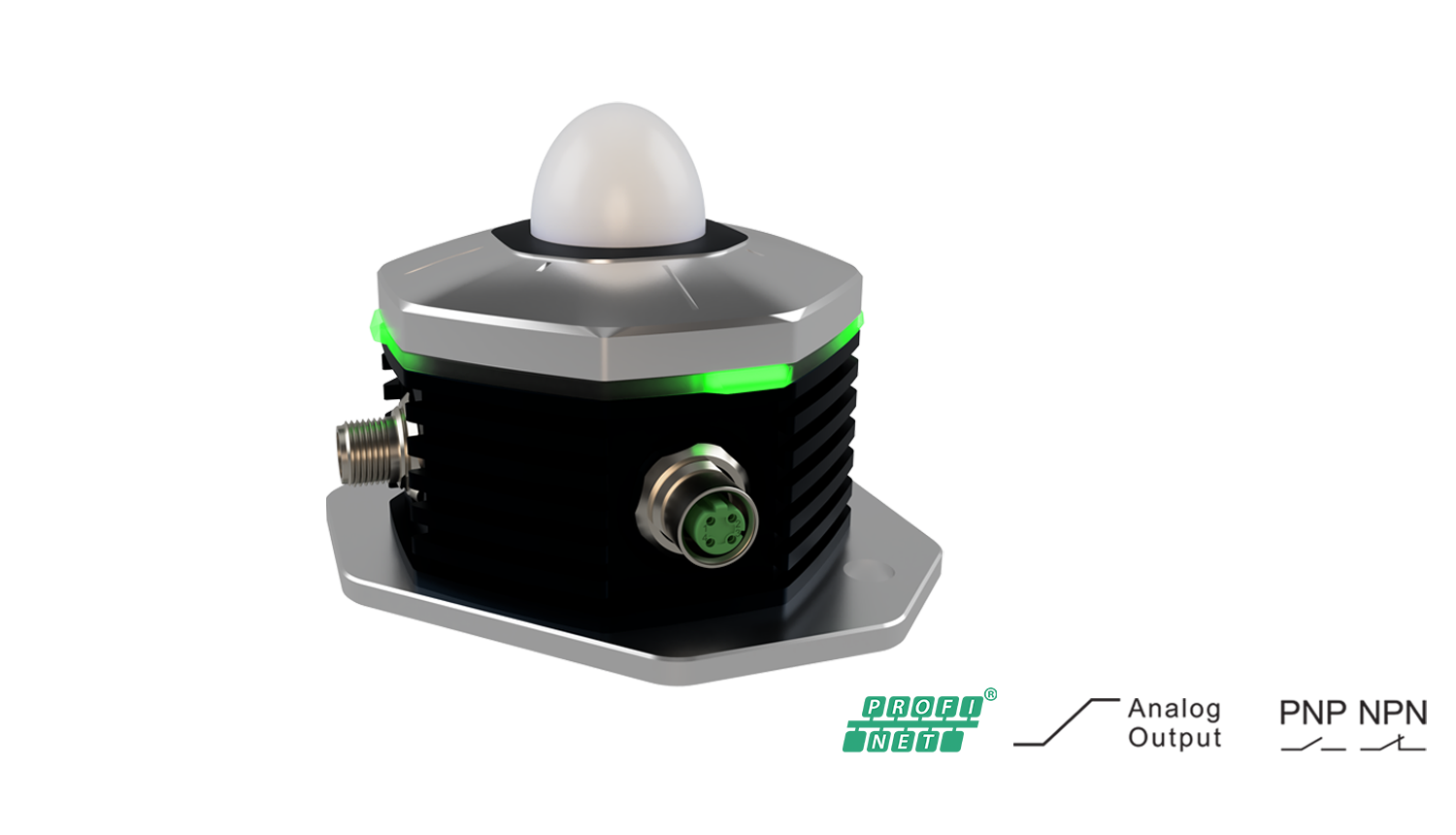
Precise detection of the surface of liquid metal up to 1600 °C thanks to specific filter algorithms and a high measuring rate of 500 Hz
- Opening angle ±1.5°
- Filters out even strong surface fluctuations
- Detects all metals and alloys
- Insensitive to vapors, dust, smoke and heat
- PROFINET interface with additional 4 ... 20 mA interface
and three digital switching outputs PNP/NPN
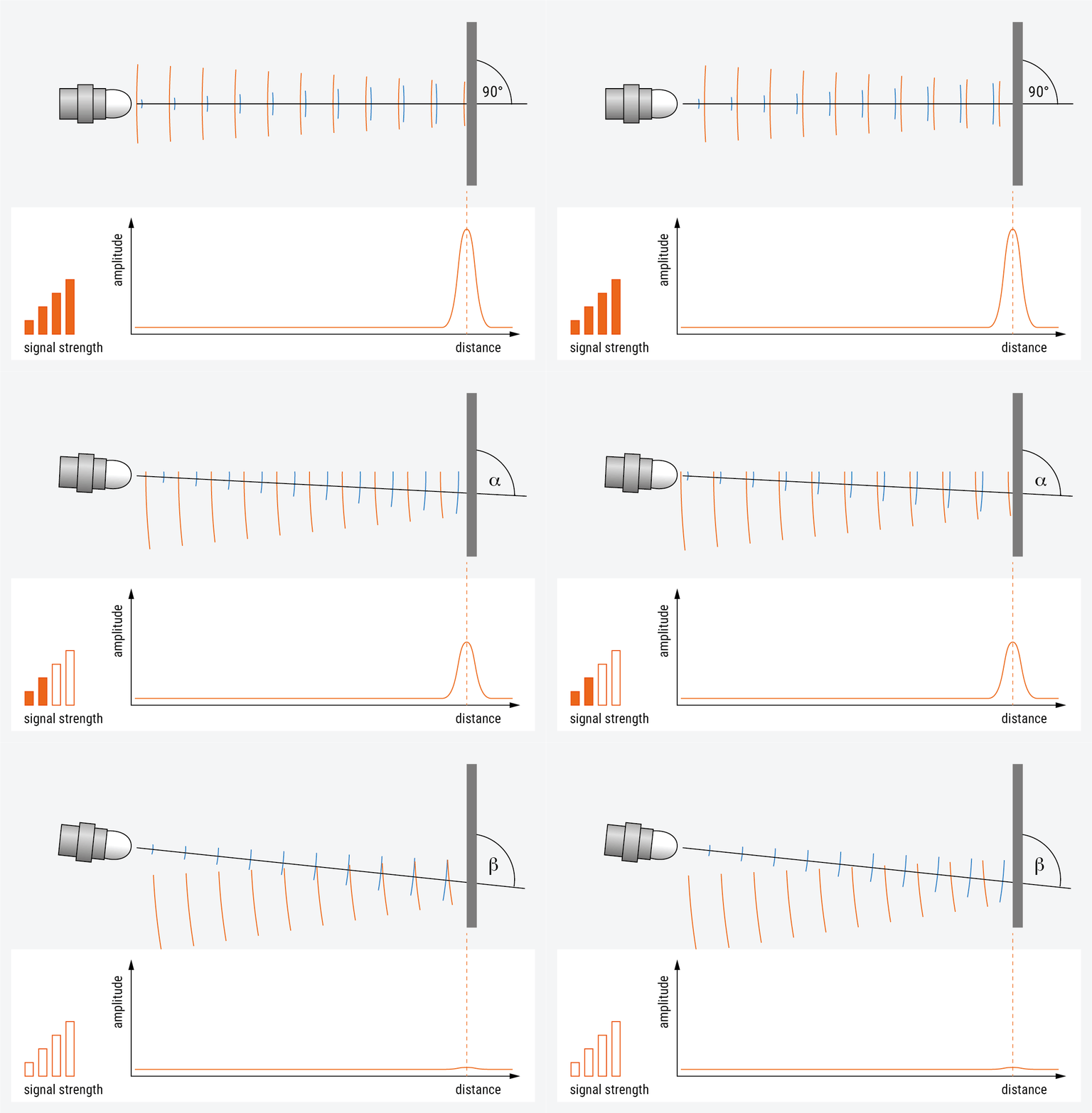
Maximum signal strength
Mounting plate for fine angle adjustment
For an optimum measurement result, the exact alignment of the
of the sensor to the object to be measured is crucial. The maximum
signal strength of the reflected radar wave is determined by the
radar sensor is aligned at right angles to the surface of the target.
surface of the measurement object. Especially with a narrow aperture angle
the tolerances for a deviation from the perpendicular are
relatively small in order to receive a signal at all.
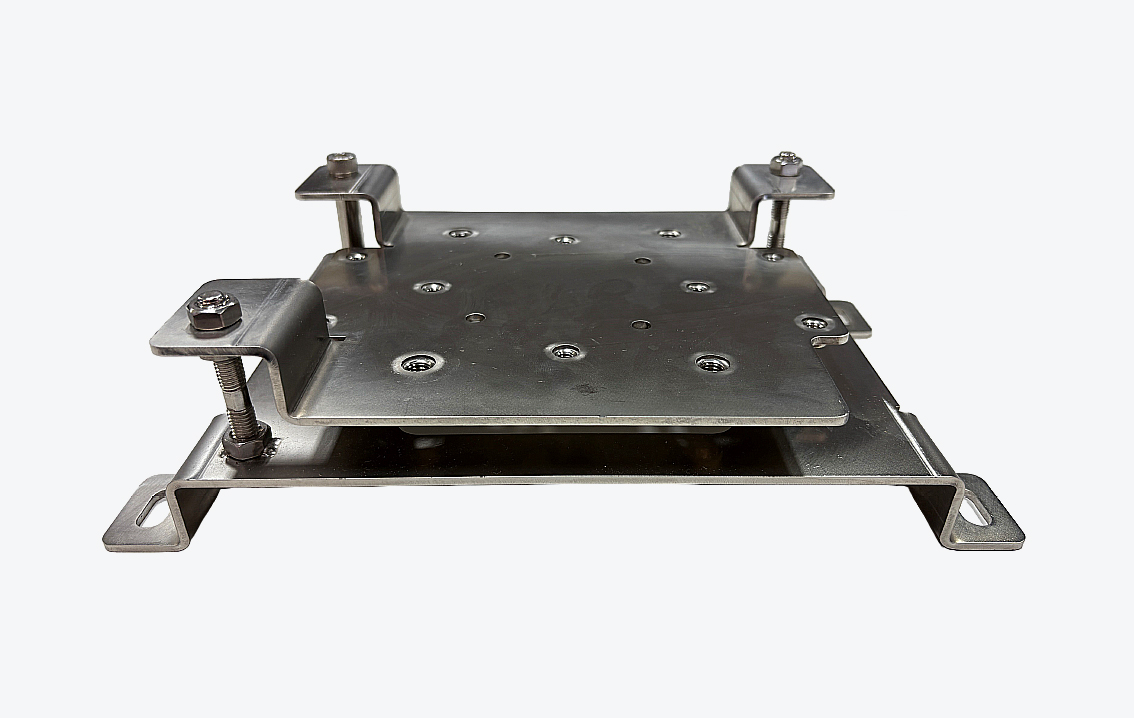
For fine angle adjustment of the RAD7xx radar sensor, a special
special mounting plate. Using 2 adjustment screws, the plate can be
plate can be adjusted up to ±2 mm horizontally and ±1.5 mm vertically.
Threaded holes allow the RAD7xx to be mounted both directly and
directly or with the heat protection housing to the mounting plate.
fastened
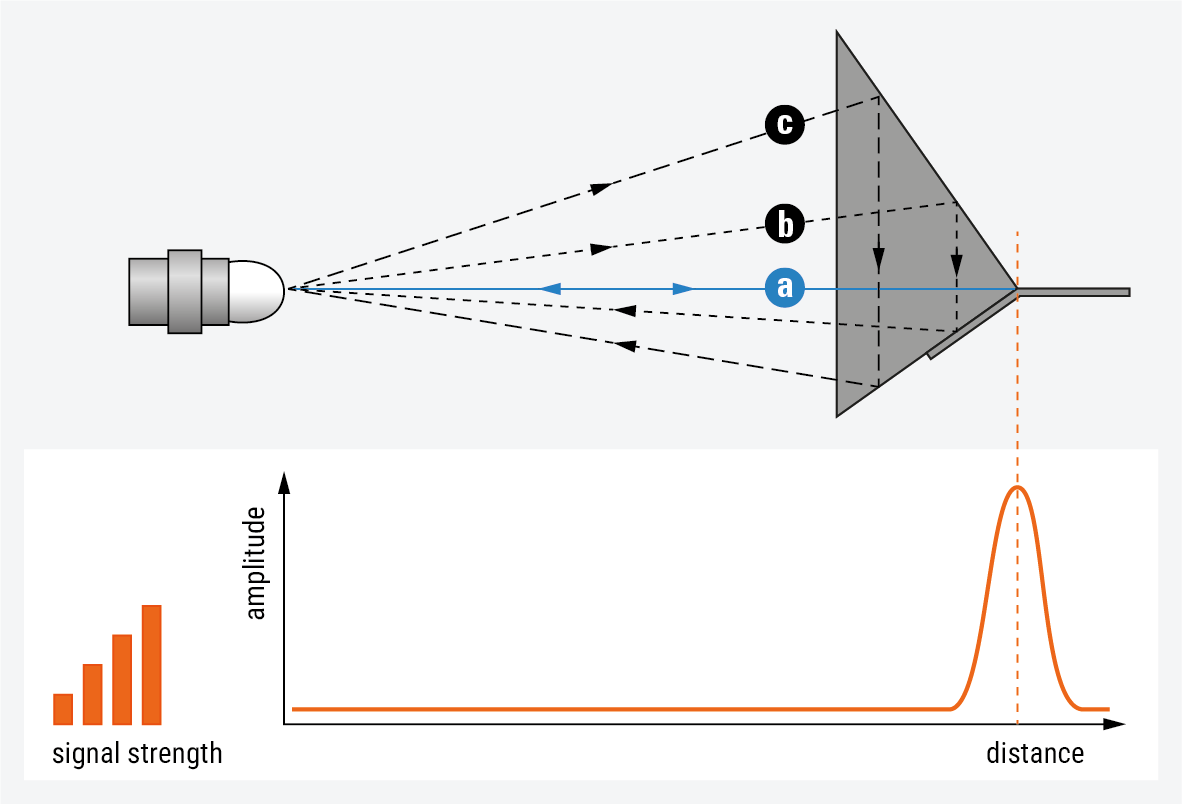
Angle reflector for optimizing the signal strength in the application
Uneven surfaces or problematic focusing on a target object at a greater
target object at a greater distance can greatly influence the signal strength of the
radar signal to be received. To increase
signal strength for greater measurement accuracy, angled reflectors can
Angle reflectors can help here.
- Increasing the signal strength received from a target.
- Increasing the possible angle between sensor and target.
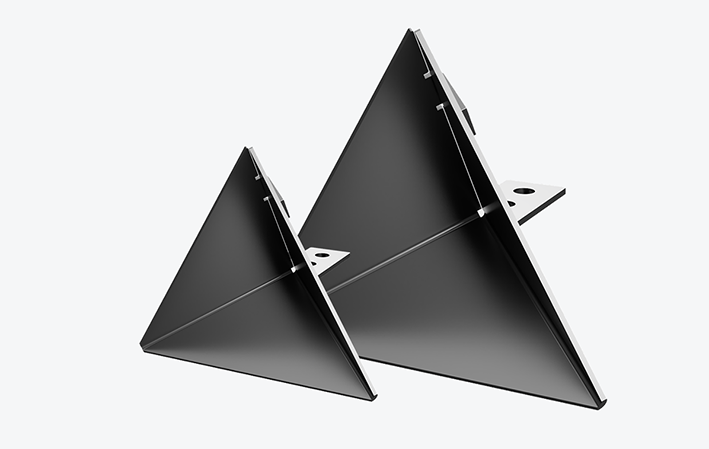
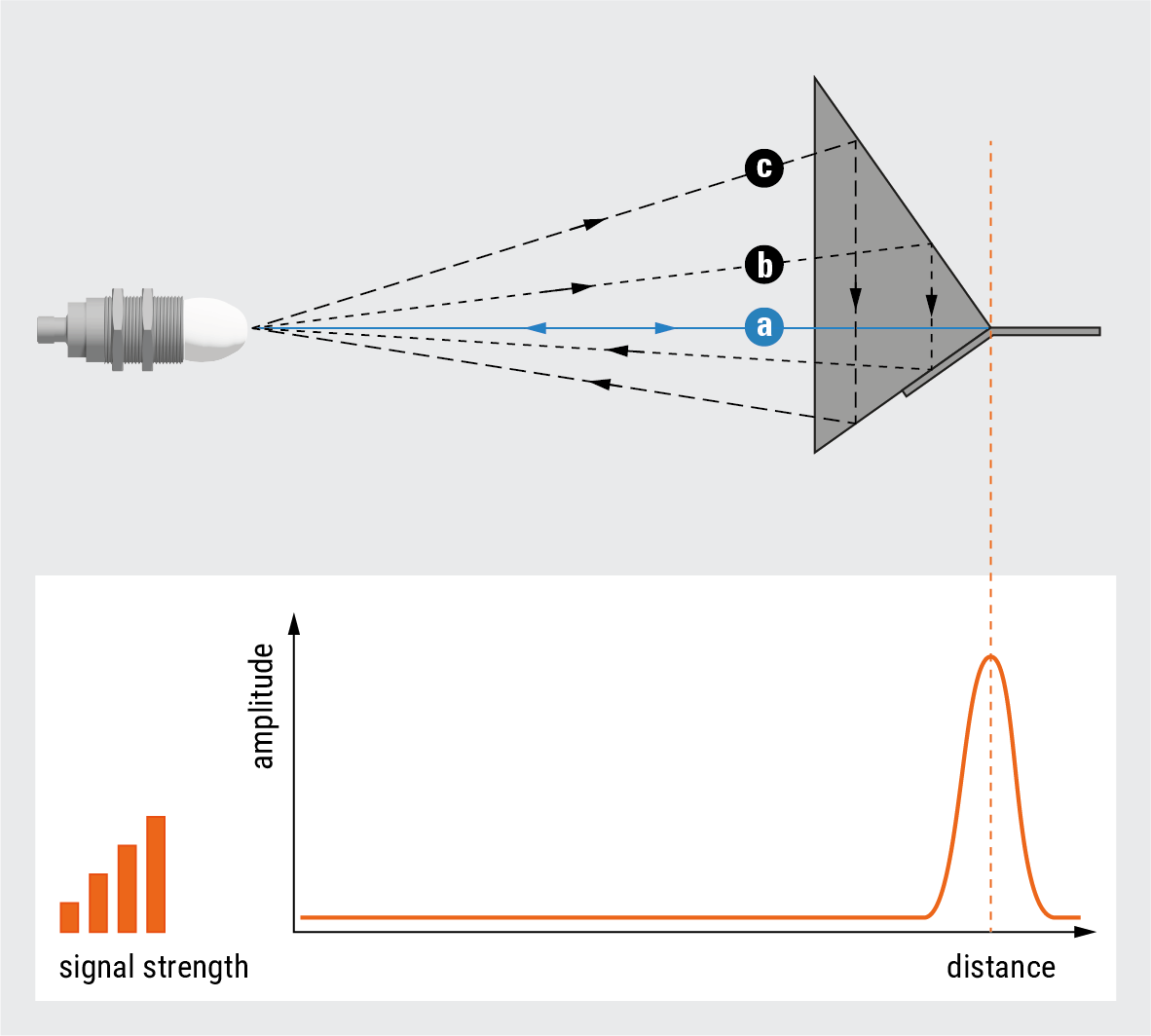
Angle reflectors "bundle" the radar signals over a larger area.
area. The geometry is designed in such a way that reflections at each
(b+c) travel the same distance to and from the sensor as the direct reflection
the direct reflection (a) at a 90° angle.
Maximum heat protection
Heat protection housing with connection for air cooling
The heat protection housing for the RAD7xx radar sensors has an
has an active cooling system. It enables operation of the
sensors even at extreme ambient temperatures of up to
1600 °C.

RAD78L applications in the steel industry
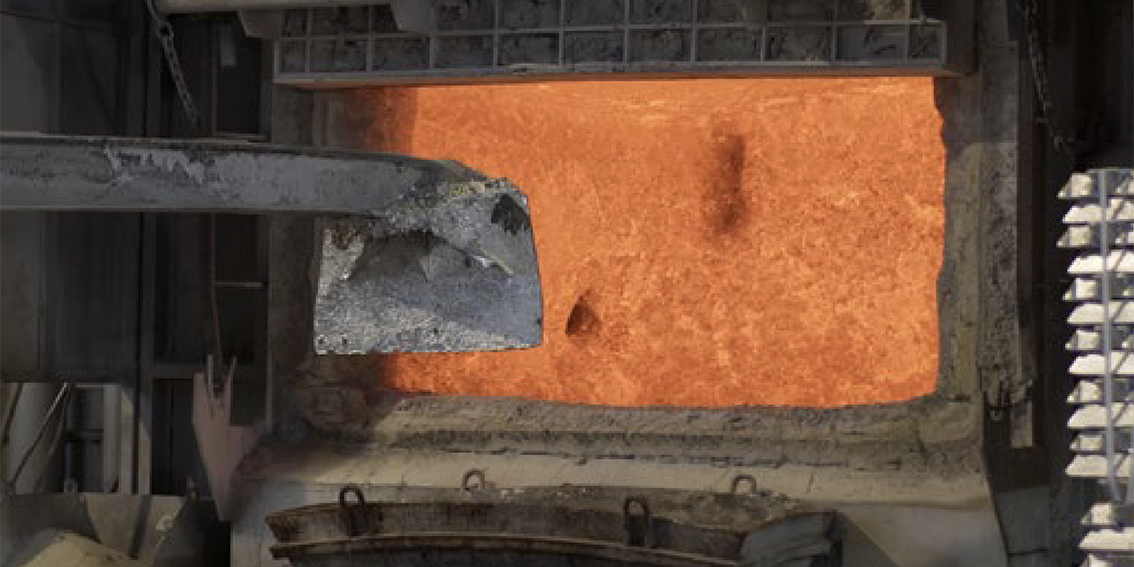
Monitoring the molten metal level in open and closed furnaces
- Recommended variant RAD78L :
Liearity ±2 mm / Measuring range 0.3 ... 30 m - In the corresponding protective housing measurements through small openings
in the oven lid (50 mm) possible
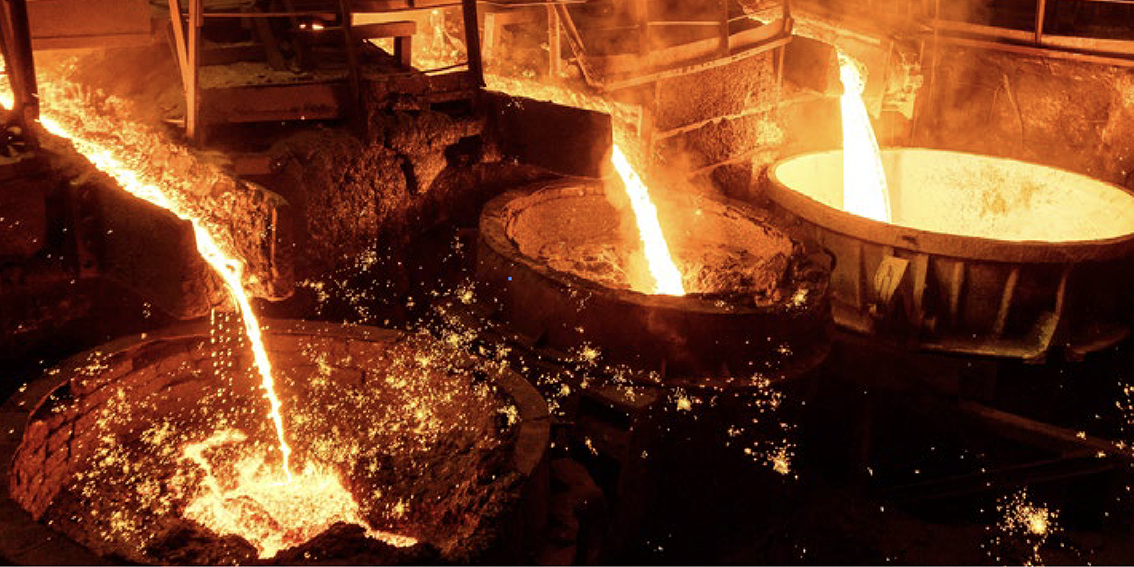
Liquid metal level, e.g. in casting ladles or torpedo cars - Measurements from distances of up to 20 m
- Recommended variant RAD78L :
Liearity ±2 mm / Measuring range 0.3 ... 30 m - Additional heat protection by housing for 90° reflection of the radar signal
radar signal
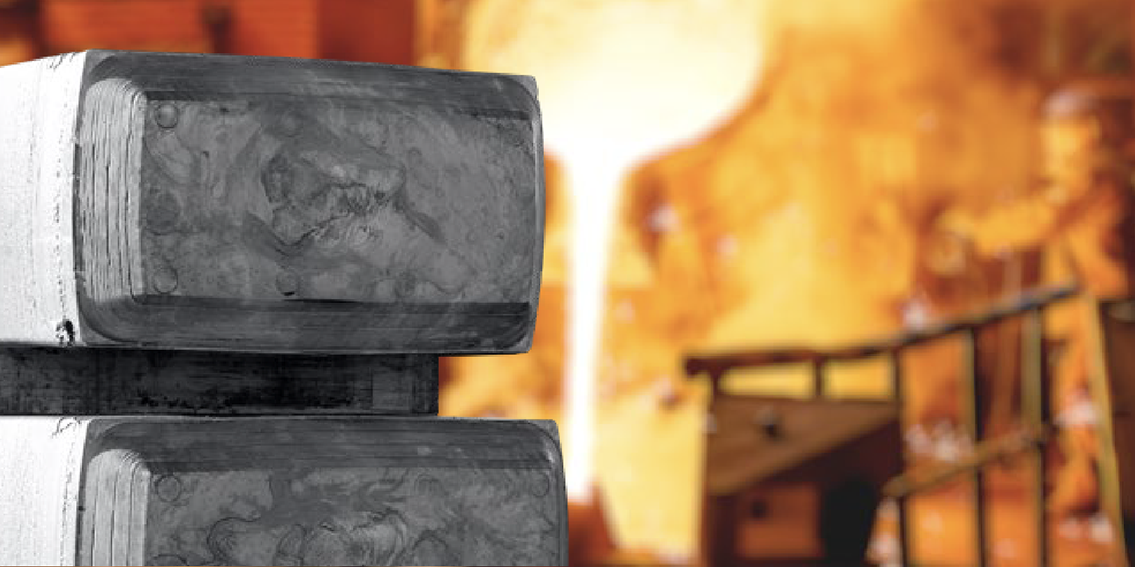
Plate and ingot casting - control of the filling level of the casting pit with maximum linearity up to ±0.3 mm
- Recommended variant RAD78L :
Liearity ±0.3 mm / Measuring range 0.1 ... 6 m - High accuracy even from a distance of 6 meters
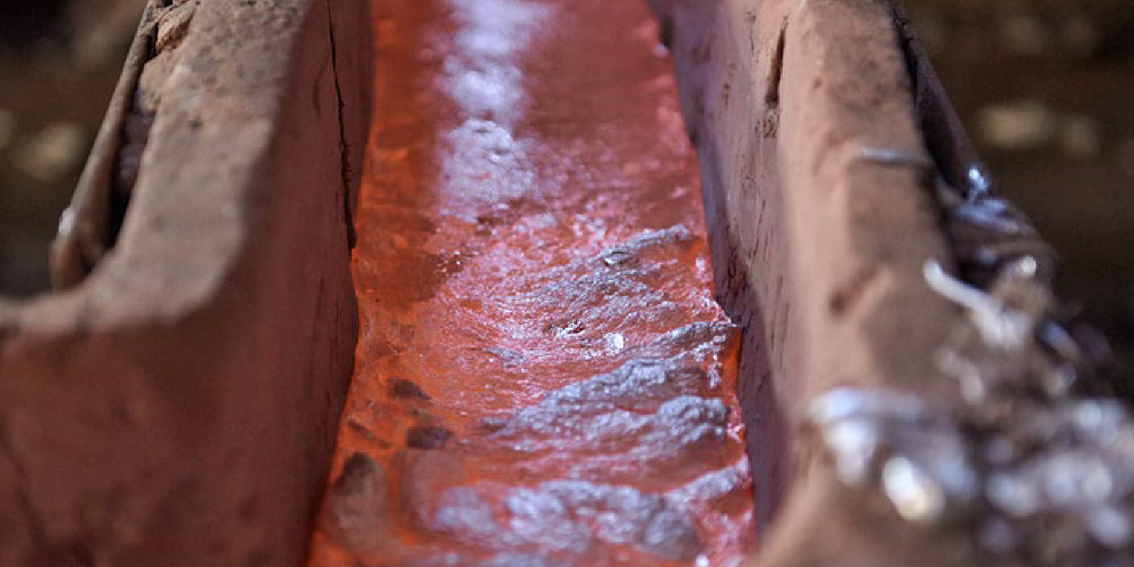
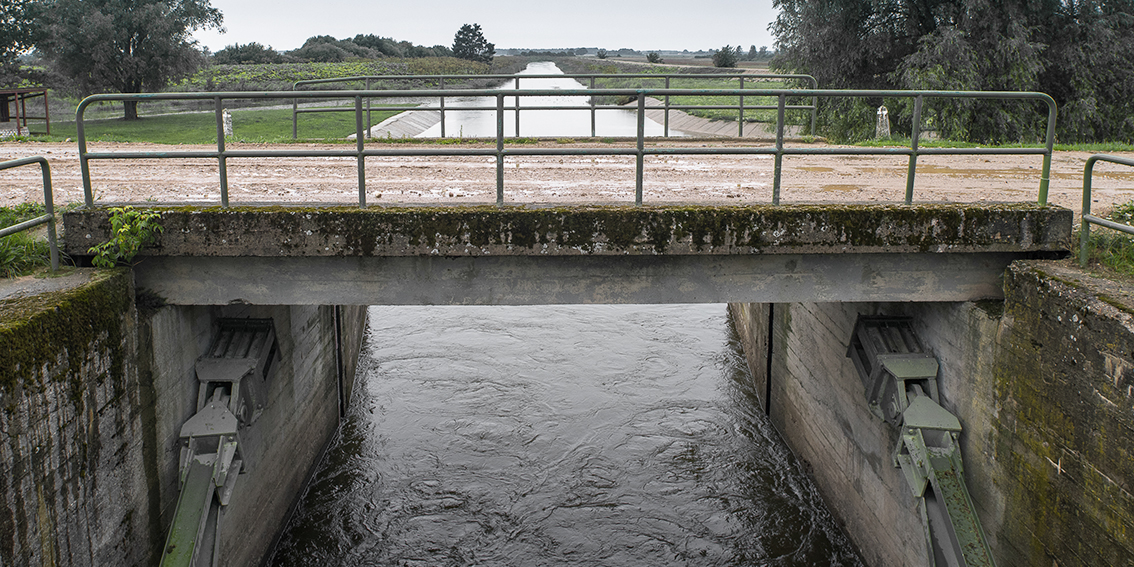
Drainage channels and ducts - Quick and precise determination of the drainage level even with strong surface movement
- Recommended variant RAD78L :
Liearity ±0.3 mm / Measuring range 0.1 ... 6 m - Measurement even in narrow channels due to narrow opening angle ±1.5°
Radar sensors for simple measurement tasks in a compact design
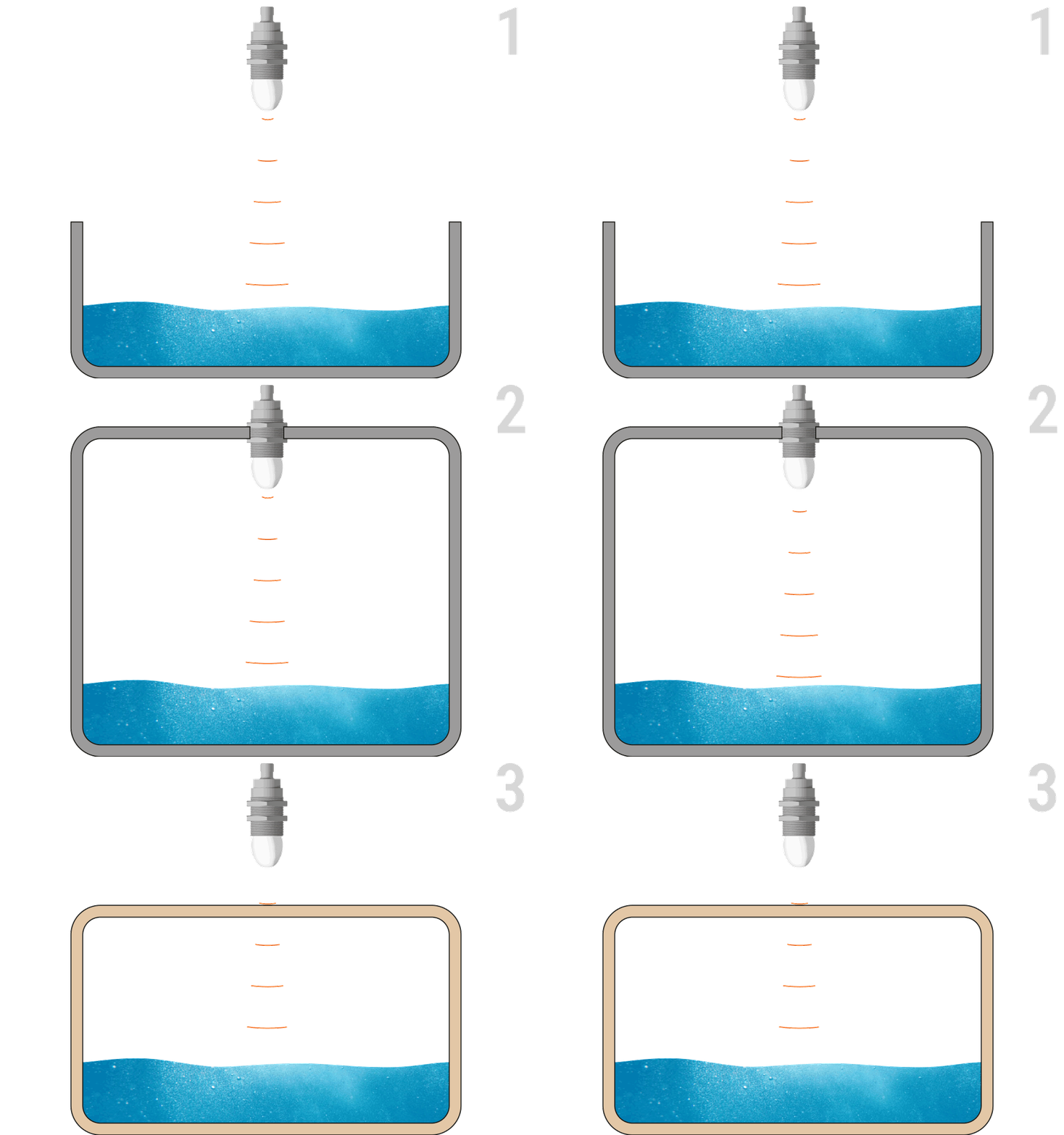
Because certain materials are permeable to radar waves, this
opens up installation options that are not possible with other
measurement systems.
- Direct measurement on liquid surfaces.
- Sensor integrated into a sealed metal container.
- Measurement from the outside through the wall of a
plastic container.

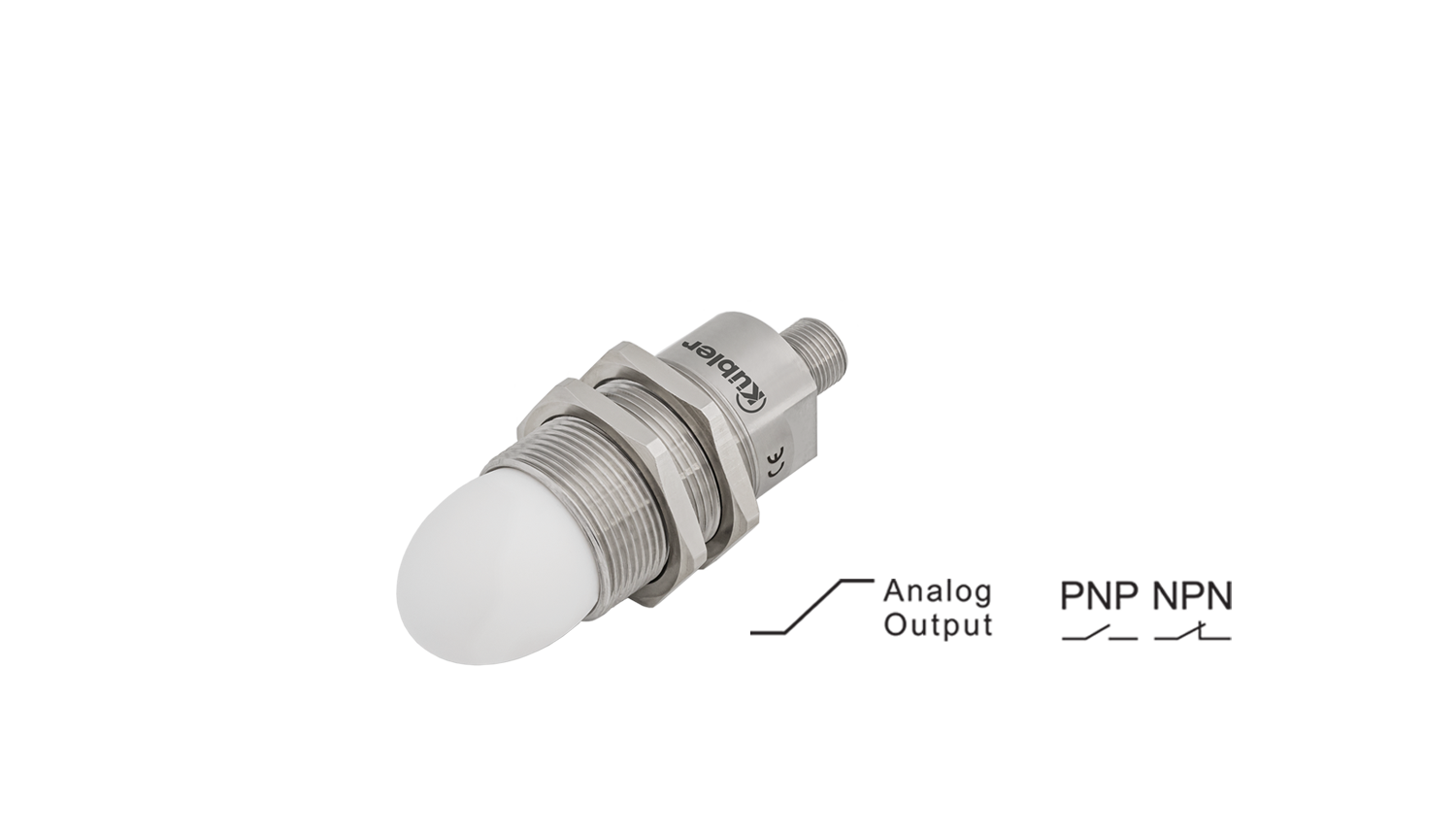
Compact design for confined installation situations with simple installation
- Opening angle ±3° for high signal strength
- Repeat accuracy ±1 mm
- Wide measuring range from 0.15 ... 40 m
- Simple installation, adjustment and commissioning
- Analog output 4 ... 20 mA + 3 switching outputs
Maximum signal strength
Mounting bracket for optimum alignment of the sensor to the application
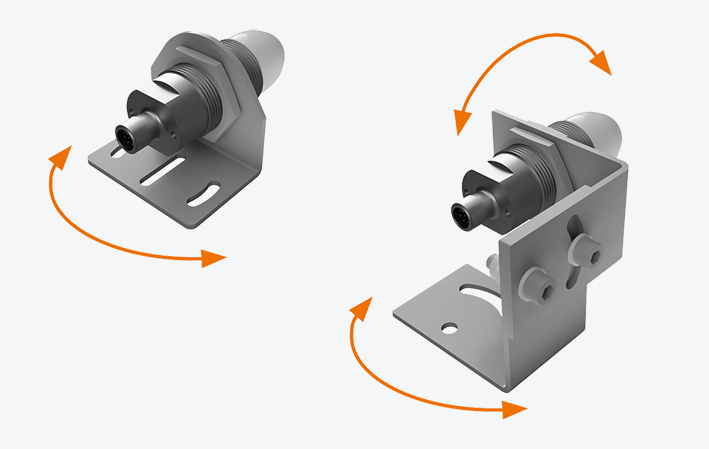
Precise alignment of the sensor to the measurement object is crucial for optimum measurement results. The maximum signal strength of the reflected radar wave is achieved by aligning the radar sensor at right angles to the surface of the measurement object. Especially with a narrow aperture angle, the tolerances for a deviation from the vertical are relatively small in order to receive a signal at all.
For quick and precise alignment, corresponding mounting brackets are available for the RAD5xx series.
RAD5xx series, either for rotation about one or two axes perpendicular to the measuring direction.
Angle reflector for optimizing the signal strength in the application
Uneven surfaces or problematic focusing on a target object at a greater distance can strongly influence the signal strength of the radar signal to be received. Angle reflectors can help to increase the signal strength for greater measurement accuracy.
- Increasing the signal strength received from a target.
- Increasing the possible angle between the sensor
and the target.
Angle reflectors "bundle" the radar signals over a larger area. The geometry is designed so that reflections at any point (b+c) travel the same distance to and from the sensor as the direct reflection (a) at a 90° angle.
Maximum transparency
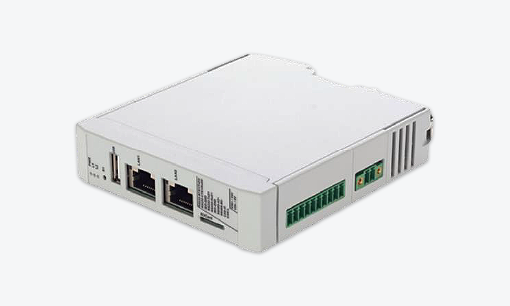
ConfigBox for easy visualization of the echo curve as well as
Setting the parameters and filter functions
For transferring the sensor data to a PC/laptop. After connecting the sensor to the PC via the ConfigBox, the configuration software is opened via the browser.
The software can be used to configure the sensor to the respective
application requirements or to check its status during operation. In addition to the visualization of the echo curve, the following settings can be configured:
- Configuration of the analog interface
- Setting the switching points for the switching outputs
- Setting the measuring range
- Definition of the signal threshold value
- Selection of the desired signal for multiple peaks
- and much more.
Applications for RAD51D
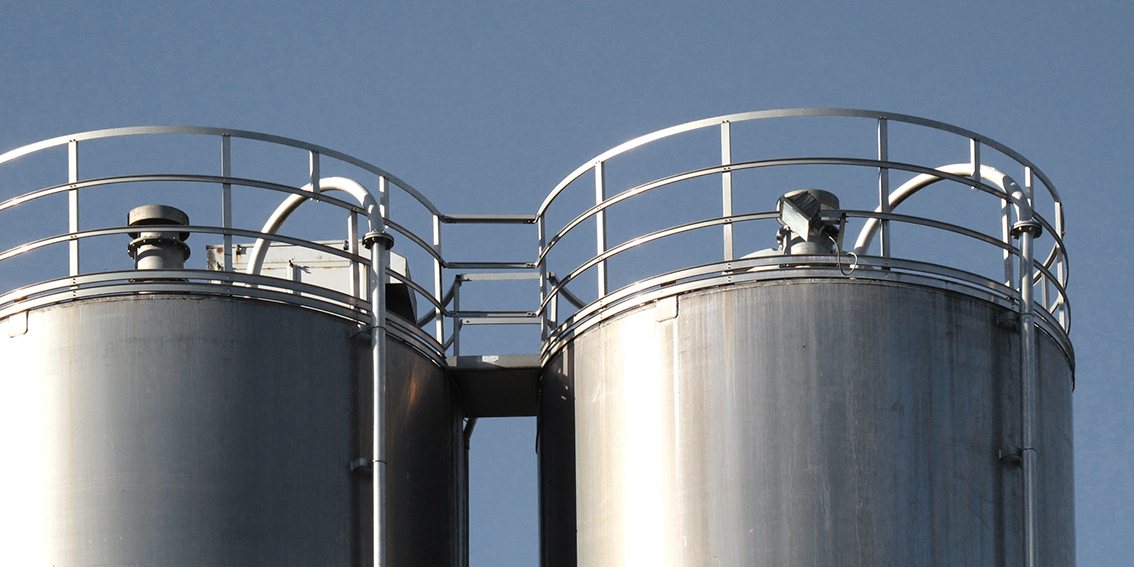
Level measurement in containers with liquids